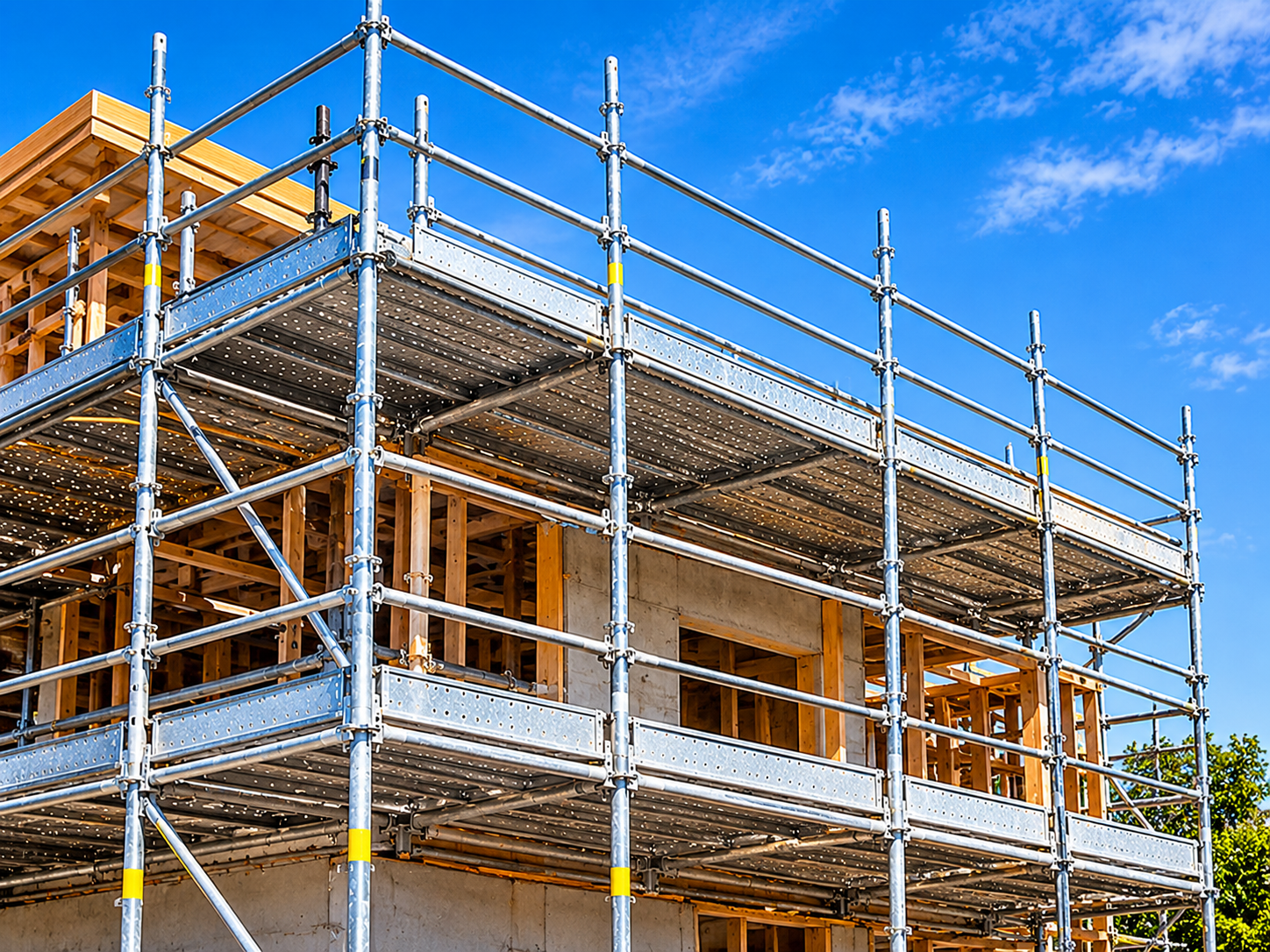
Kwikstage is the most common modular scaffold system on Australian building sites, and for good reason. It goes up fast, it’s flexible, and parts are easy to find.
But buying a Kwikstage set isn’t just ordering “some scaffold.” You need the right components, the right quantities and proof it’s compliant. This guide covers all three.
What Is Kwikstage Scaffolding?
Kwikstage is a modular scaffold system. Vertical standards have welded cups at regular intervals, and horizontal ledgers and transoms lock into them with wedge-style connections. No loose bolts, and no tube-and-coupler fiddling.
Why builders and scaffolders choose it:
- Fast to erect and dismantle
- Suits residential, commercial and industrial jobs
- Easy to expand or reconfigure
- Widely used, so parts and resale are straightforward
- Standard component sizes keep ordering simple
Kwikstage vs Other Scaffold Systems
Kwikstage | Cuplock | Tube and coupler | Aluminium tower | |
Speed | Fast | Fast | Slow | Very fast |
Flexibility | High | High | Highest | Low |
Best for | General building | Heavy-duty, large jobs | Complex shapes | Light maintenance |
Skill needed | Moderate | Moderate | High | Low to moderate |
For most NSW residential and light commercial work, Kwikstage is the practical choice.
Kwikstage Components: The Full List
Know what’s in a system before you price it.
Structural components
- Base jacks: adjustable feet that level the scaffold on uneven ground
- Standards (verticals): the upright posts with cups at regular intervals, available in several lengths
- Ledgers: horizontal members running along the length of the scaffold
- Transoms: horizontal members running across the width, supporting the planks
- Diagonal braces: provide stability and stop racking
Working platform components
- Steel planks or decks: the walking and working surface
- Toe boards: stop tools and materials falling off the edge
- Guardrails and midrails: edge protection for the working platform
Access components
- Ladders or ladder access units
- Stair units: safer for frequent access and carrying materials
Support and stability components
- Ties: fix the scaffold back to the structure
- Couplers: connect tube sections where needed
- Sole boards: spread load under base jacks on soft ground
4 Types of Kwikstage Setup You’ll Buy For
- Standard perimeter scaffold: around a house or building for bricklaying, rendering or cladding
- Birdcage scaffold: a freestanding platform for internal ceiling or overhead work
- Stair tower: a dedicated access structure beside the main scaffold
- Loading bay or cantilever platform: for material drop-off at height
Your job type decides which components and quantities you need.
Duty Ratings: Pick the Right One
- Light duty: 225 kg per bay
- Medium duty: 450 kg per bay
- Heavy duty: 675 kg per bay
Bricklaying and block work usually needs medium or heavy duty. Painting and inspection work can use light duty. Buy for the heaviest work you’ll realistically do.
New vs Second-Hand Kwikstage
New
- Known condition and full compliance documentation
- Consistent galvanising and tolerances
- Warranty support
- Higher upfront cost
Second-hand
- Lower upfront cost
- Condition varies wildly, so inspect every piece
What to check on second-hand components:
- Bent or kinked standards and ledgers
- Cracked or repaired welds
- Worn, bent or damaged wedges and cups
- Deep rust or pitting
- Damaged planks and hooks
- Mismatched parts from different manufacturers
Never mix components from different systems. They may look compatible, but they haven’t been tested together.
Kwikstage Buying Checklist
- Confirmed the scaffold type and layout for the job
- Chosen the correct duty rating
- Calculated bays, lifts and total component quantities
- Included base jacks, sole boards, ties and braces
- Included planks, toe boards, guardrails and midrails
- Included stair or ladder access
- Verified compliance documents
- Checked licence requirements for your crew
- Inspected every component if buying second-hand
- Ordered a 10% to 15% buffer
- Confirmed delivery, site access and unloading
- Arranged dry, flat storage
Common Mistakes to Avoid
- Buying only the frame components. Edge protection, access and ties are what make the scaffold safe and usable.
- Choosing on price alone. Cheap, non-compliant scaffolds are a legal and safety risk.
- Skipping storage. Wet, stacked-on-the-ground components rust and warp.
- Assuming anyone can erect it. Licensing rules apply.
- Under-ordering. Waiting on a top-up order mid-job costs more than ordering extra upfront.
Delivery Across NSW
The scaffold is heavy, long and awkward. Plan it:
- Confirm truck access and unloading method
- Check council or permit requirements for street deliveries
- Be on site to receive and sort components
- Stack by component type for easy erection
Frequently Asked Questions – Kwikstage Scaffolding in NSW
Yes. It’s one of the most common systems for houses, extensions and light commercial jobs.
If a fall of more than 4 metres is possible, you need the appropriate high-risk work licence. Check the class with SafeWork NSW.
It depends on the duty rating, commonly light (225 kg), medium (450 kg) or heavy (675 kg) per bay.
Avoid it. Components should come from the same system unless the manufacturer confirms compatibility.
It can be, if every component is inspected and meets current standards. If in doubt, don’t use it.
Plan for 10% to 15% more than your calculated quantity.
Get a Scaffolding Quote in NSW
Tell us your job type, wall length and height, and we’ll come back with a quote.
📧 sales@buildinggear.com.au