If you are building or renovating a home in Sydney, you may have heard the term yellow tongue flooring. But what is it, and why is it commonly used in Australian construction?
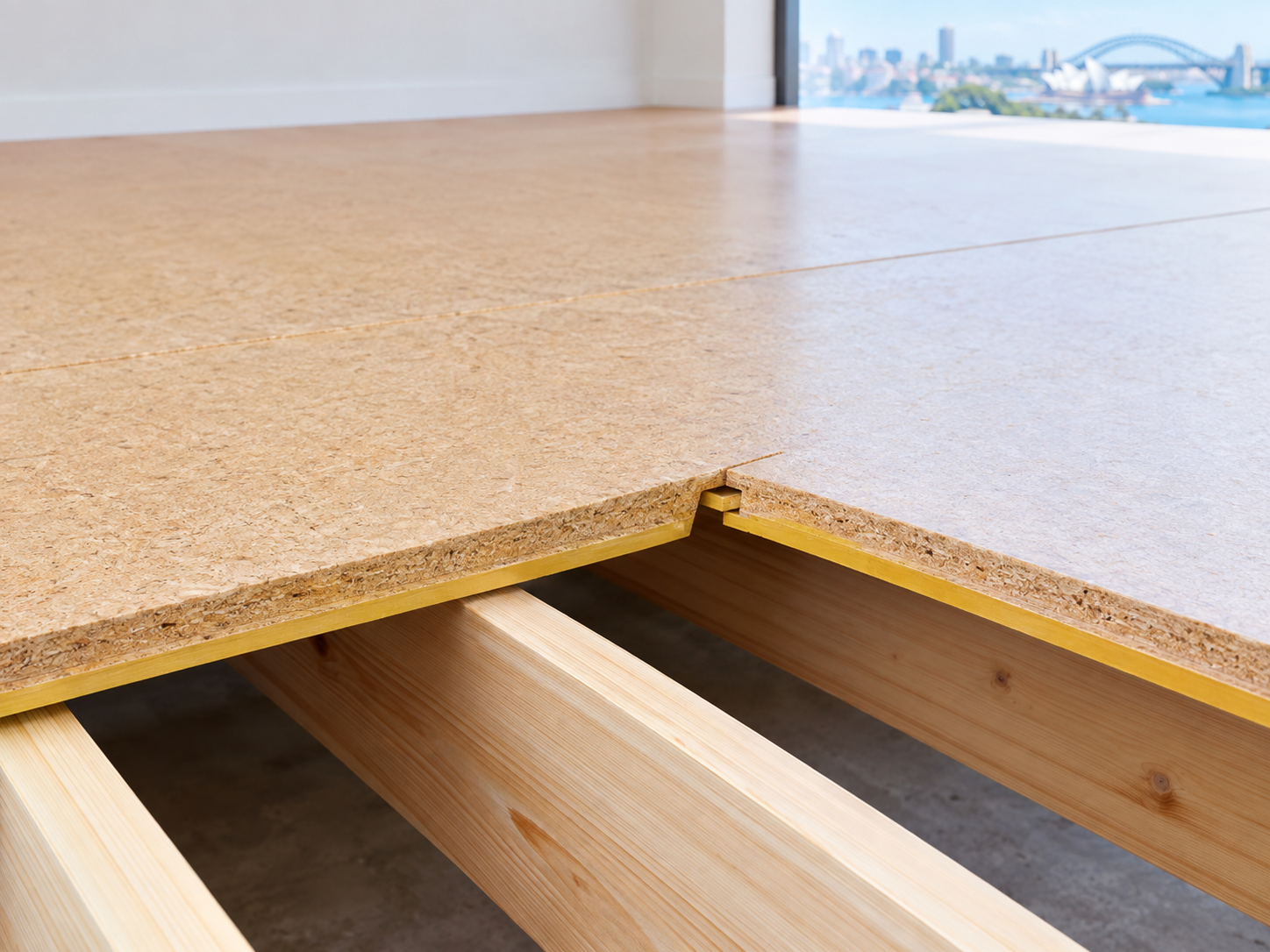
Yellow tongue flooring is a type of structural particleboard flooring designed to be installed over suitable floor joists or supporting structures. The panels feature tongue-and-groove edges that connect the sheets together during installation.
What Is Yellow Tongue Flooring Used For?
Yellow tongue flooring is commonly used for:
- New home construction
- House renovations
- Home extensions
- Timber-framed floors
- Second-storey additions
- Suspended flooring systems
- Residential construction projects
It provides a stable structural base before the final floor covering is installed.
Why Is It Called Yellow Tongue Flooring?
The name comes from the yellow-coloured tongue edge found on commonly used flooring panels.
The tongue fits into the groove of the adjoining panel, helping create a connected and aligned floor surface.
However, not every product has exactly the same specifications, so it is important to check the manufacturer’s product information before purchasing.
Benefits of Yellow Tongue Flooring
1. Easy Panel Connection
The tongue-and-groove edges allow panels to connect neatly with each other.
2. Strong Structural Base
When correctly selected and installed, yellow tongue flooring provides a solid base for a floor system.
3. Faster Installation
Large sheets can cover a significant floor area, helping make installation more efficient.
4. Suitable for Residential Projects
It is commonly used in Australian residential construction, including homes, renovations and extensions.
5. Ready for Floor Finishes
Depending on the flooring system, suitable finished flooring can be installed over the structural flooring.
Is Yellow Tongue Flooring Waterproof?
No. Yellow tongue flooring should not automatically be considered waterproof.
Because it is a wood-based product, excessive moisture can cause problems such as:
- Swelling
- Edge damage
- Surface deterioration
- Dimensional changes
- Installation problems
This is particularly important during construction in Sydney, where flooring materials may be exposed to rain and moisture.
Always follow the manufacturer’s instructions for storage, protection and installation.
What Thickness of Yellow Tongue Flooring Do You Need?
There is no single thickness suitable for every project.
The correct flooring thickness depends on:
- Joist spacing
- Structural requirements
- Expected loads
- Product specifications
- Building design
- Installation requirements
Always check the manufacturer’s span tables and technical information before selecting a product.
Yellow Tongue Flooring vs Plywood
Both yellow tongue particleboard flooring and structural plywood can be used in construction, but they are different products.
Yellow tongue flooring:
- Structural particleboard
- Tongue-and-groove profile
- Commonly used for residential floors
- Available in different specifications
Structural plywood:
- Made from layers of wood veneer
- Available in different structural grades
- Can be suitable for specific flooring and structural applications
The best option depends on your project’s design, environmental conditions and structural requirements.
Frequently Asked Questions
Is yellow tongue flooring waterproof?
No. It should not be treated as waterproof unless the specific product is designed and rated for that application
Can yellow tongue flooring be used upstairs?
Yes. It can be used in suitable upper-floor systems when the product meets the project’s structural requirements.
Can yellow tongue flooring get wet?
Temporary exposure may be permitted for some products, but excessive or prolonged moisture exposure should be avoided.
Is yellow tongue flooring good for renovations?
Yes. It can be suitable for many renovation and extension projects when correctly specified.
Is Yellow Tongue Flooring Suitable for Sydney?
Yes, yellow tongue flooring can be suitable for Sydney construction projects when the correct product is selected for the application.
Before purchasing, consider:
- Joist spacing
- Moisture exposure
- Structural requirements
- Flooring thickness
- Product rating
- Manufacturer installation instructions
For Sydney construction, protecting flooring from unnecessary rain and moisture during installation is especially important.
How Is Yellow Tongue Flooring Installed?
The general installation process includes:
- Preparing and checking the supporting joists.
- Planning the panel layout.
- Positioning panels correctly.
- Connecting the tongue-and-groove edges.
- Applying the recommended adhesive if required.
- Fixing panels with the specified fasteners.
- Checking the completed floor before installing the final floor covering.
Installation should always follow the specific manufacturer’s instructions and applicable building requirements.
How Much Does Yellow Tongue Flooring Cost in Sydney?
The price can vary depending on:
- Panel thickness
- Product specification
- Quantity required
- Supplier
- Delivery location
- Current material prices
When comparing prices, consider the total project cost, including delivery, fixings, adhesive and installation.
How to Choose Yellow Tongue Flooring
Before buying yellow tongue flooring, check:
- Correct thickness
- Suitable joist spacing
- Structural rating
- Moisture requirements
- Panel dimensions
- Manufacturer specifications
- Project requirements
Buying the right product from the beginning can help avoid unnecessary replacement costs and installation problems.