
Buying scaffolding is not like buying a box of screws. Get it right and your crew works safely and fast. Get it wrong and you’re looking at a stop-work notice, a failed inspection, or an injury that never should have happened.
This guide covers what Sydney builders and contractors need to know before spending a dollar.
Buy or Hire? Decide This First
Buy if:
- You’ll use scaffold on more than 3 to 4 jobs a year
- You have crew who can erect, inspect and store it properly
- You have somewhere dry to keep it
- Jobs run long (6 months or more), where hire fees add up fast
Hire if:
- It’s a one-off or short job
- The job needs a complex or engineered setup
- You don’t have storage or a licensed scaffolder on the team
Rule of thumb: if hire costs on a single long job approach the purchase price of the system, buy.
The 4 Main Scaffold Types
Type | Best for | Pros | Watch out for |
Kwikstage (modular) | Residential, commercial, general building | Fast to erect, very common in Australia, easy to resell | Needs trained erectors |
Cuplock | Large commercial, heavy-duty loads, formwork support | Strong, quick locking system | Heavier to move |
Tube and coupler | Odd shapes, heritage buildings, complex facades | Fits almost any layout | Slow to build, needs skilled labour |
Aluminium mobile tower | Painting, maintenance, interior work | Light, quick to move | Not for heavy loads or high-rise |
Most Sydney builders start with Kwikstage. It suits most residential and light commercial work, and parts are easy to find.
Know Your Duty Rating Before You Buy
Scaffold is rated by how much load each bay can carry:
- Light duty: 225 kg per bay (painting, inspections)
- Medium duty: 450 kg per bay (bricklaying, rendering, general trades)
- Heavy duty: 675 kg per bay (masonry, stacked materials)
Buy for the heaviest job you’ll realistically do, not the lightest. Upgrading later costs more than getting it right once.
Compliance Checklist (Non-Negotiable)
Scaffolding in NSW is regulated, and it’s the buyer’s job to check compliance.
- Components should comply with AS/NZS 1576 and AS/NZS 1577. Ask for proof, not a promise.
- Erecting scaffolds where a person could fall more than 4 metres requires a high-risk work licence (Basic, Intermediate or Advanced class, depending on the scaffold).
- A scaffold over 4 metres needs a handover certificate from the scaffolder before anyone uses it.
- Scaffolds must be inspected at regular intervals and after storms, impacts or alterations.
- Edge protection and guardrails must meet AS 4994.
Check the current requirements on the SafeWork NSW website before you buy. Rules and codes get updated.
What to Inspect on New and Second-Hand Scaffold
New scaffold:
- Compliance tags or certification on components
- Even galvanising with no rough spots
- Straight tubes, clean welds, tight fit between parts
- Supplier warranty in writing
Second-hand scaffold (check twice):
- Bent or kinked tubes (walk away from these)
- Cracked welds
- Rust that’s more than surface deep
- Worn or damaged locking wedges and cups
- Planks with splits, knots or soft spots
- Missing or mismatched parts from different brands
Never mix components from different systems. They may look compatible, but they aren’t tested together.
Don’t Forget the Extras
The frames and standards are only part of the bill. Budget for:
- Base plates and adjustable jacks
- Planks and steel decks
- Toe boards and guardrails
- Ladders and access stairs
- Ties, braces and couplers
- Shade cloth or debris netting (needed for most urban sites)
- Storage racks and lifting gear
Many first-time buyers forget half this list and blow the budget.
7 Questions to Ask Any Supplier
- Are all components compliant with Australian standards?
- Can you show me test certificates or compliance documents?
- What’s the lead time on this order?
- Do you deliver to the site in Sydney, and what does it cost?
- Can I buy extra parts later in the same system?
- What warranty or returns policy do you offer?
- Can you advise on how many components I need for my job?
A good supplier answers all seven without hesitation.
How Much Should You Buy?
Don’t guess. Measure the job first:
- Total length of wall to be covered
- Height in lifts (each lift is about 2 metres)
- Number of bays
- Access points and stair towers
- Corners, returns and overhangs
Then add 10% to 15% for variations and replacements. Ordering short mid-job means delays, and delays cost more than the extra parts.
Common Buying Mistakes
- Buying on price alone. The cheapest option often costs more after repairs and replacements.
- Ignoring storage. Scaffold left out in the weather rusts fast.
- Skipping training. Owning it doesn’t mean your crew can legally erect it.
- Buying a system nobody else uses. You’ll struggle to find parts and resale value will suffer.
- Forgetting delivery. Scaffold is heavy and bulky. Get transport sorted before you pay.
Delivery and Logistics in Sydney
Scaffold is awkward freight. Before ordering:
- Check site access for trucks, especially in tight inner-city streets
- Confirm unloading arrangements (Hiab or forklift)
- Arrange council permits if the truck will occupy a street or footpath
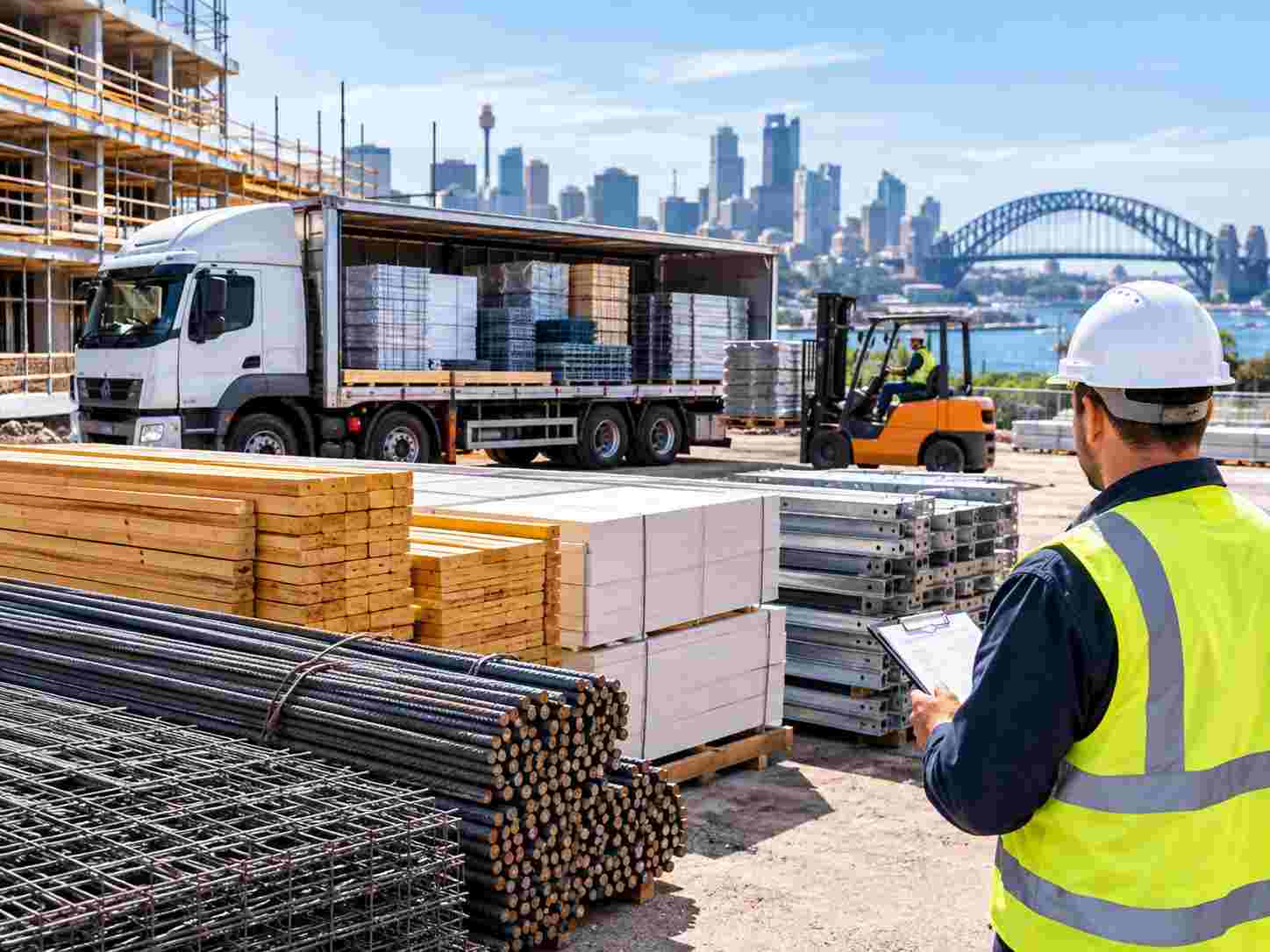
- Plan delivery for when the crew can receive and sort it
Suppliers who can also handle transport and equipment make this much easier. It’s one less thing to chase.
Quick Buyer’s Checklist
- Chose the right system (Kwikstage, cuplock, tube and coupler or aluminium)
- Confirmed the duty rating for your work
- Verified compliance documents
- Checked licence requirements for your crew
- Inspected every component (especially if second-hand)
- Budgeted for accessories, edge protection and storage
- Ordered 10% to 15% extra
- Confirmed delivery and site access
Need Building Materials, Equipment or Delivery in Sydney?
If you’re sourcing for a job and want a single supplier for materials, formwork, equipment hire and logistics, Building Gear can help with procurement and Australia-wide delivery.
get a free quote.