Short answer: Yes, but not universally — it depends on the specific Hebel panel type, thickness, and how the wall is engineered. Hebel PowerPanel and PowerWall products are commonly used in load-bearing applications when specified and installed correctly, but not every Hebel panel or every wall configuration is designed to carry structural load. Getting this distinction right matters, because using the wrong panel in a load-bearing application is a compliance and safety issue, not just a design preference.
This guide breaks down which Hebel systems are suited to load-bearing use, where they’re typically specified, and what needs to be confirmed with an engineer before you commit.
What Is Hebel, and What Is It Made Of?
Hebel is an autoclaved aerated concrete (AAC) panel product, manufactured from sand, cement, lime, and an aerating agent that gives it a lightweight, insulating structure. It’s widely used across Sydney residential and commercial builds for its combination of thermal performance, fire resistance, and faster installation compared to traditional masonry.
Hebel is sold in several panel formats, and this is where the load-bearing question really depends on specifics:
- PowerPanel — a structural, load-bearing panel system, typically used in low-rise construction
- PowerWall — a non-structural or lightly-loaded panel system, generally used for cladding and partition walls
- Various thicknesses and reinforcement configurations, which affect the load capacity of any given panel
So Can Hebel Panels Carry Structural Load?
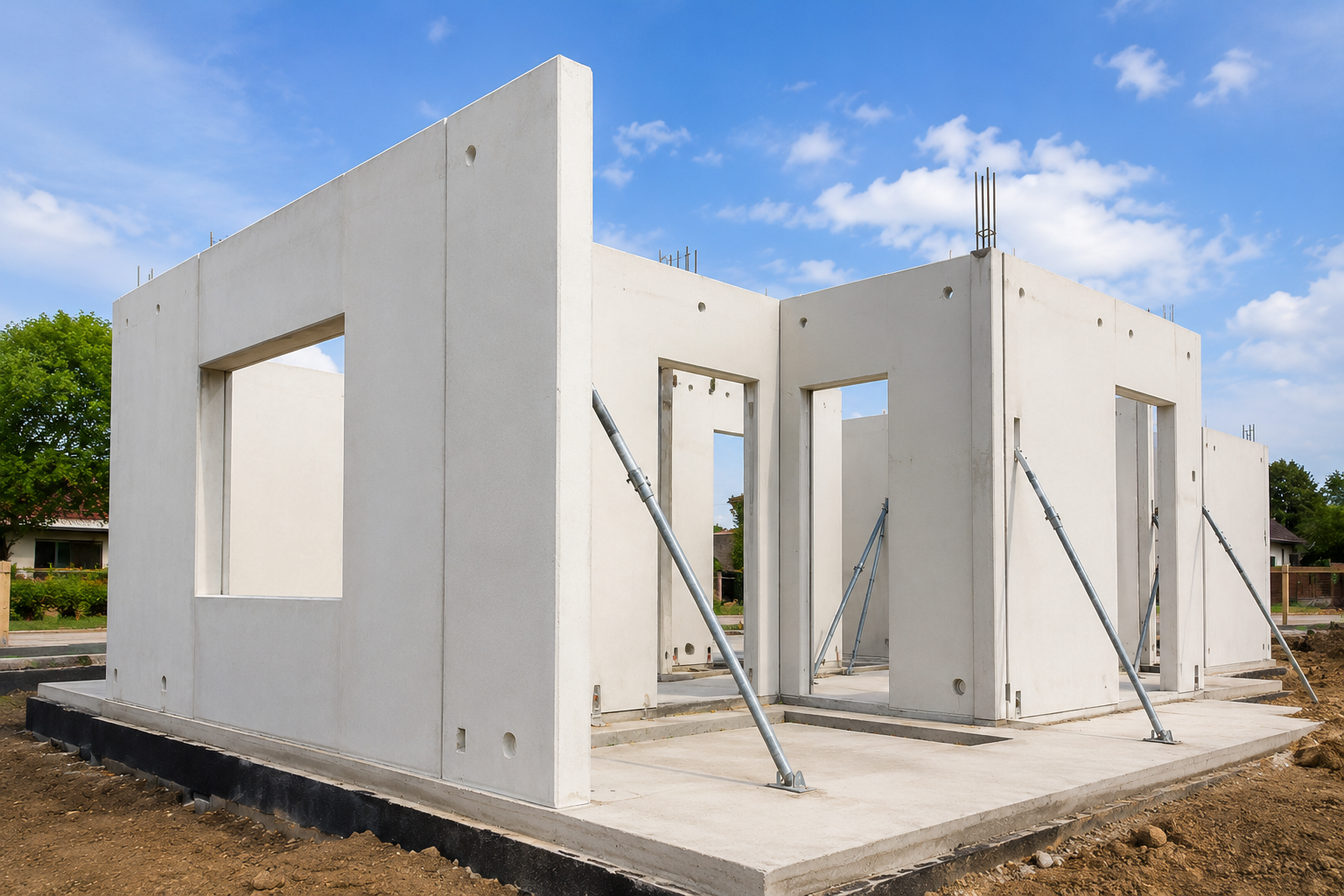
Yes — Hebel’s PowerPanel range is specifically engineered and marketed for load-bearing applications, and it’s commonly used in low-rise residential and light commercial construction across Sydney for exactly this purpose. When installed to spec, PowerPanel walls can carry roof and floor loads in appropriate building configurations.
However, this comes with real caveats:
Panel type matters. Not every Hebel product is rated for structural load. Using a cladding-grade panel in a load-bearing application isn’t a simple substitution — it’s a structural failure waiting to happen.
Building height and configuration matter. Load-bearing Hebel is typically specified for low-rise construction. As building height and load requirements increase, the engineering requirements become more demanding, and other structural systems may be more appropriate.
Engineering sign-off is non-negotiable. Any load-bearing wall — Hebel or otherwise — needs to be specified against structural engineering drawings, not chosen off a product brochure and assumed to work.
Where Load-Bearing Hebel Is Typically Used
- Single and double-storey residential builds, particularly where thermal and fire performance are priorities alongside structural function
- Granny flats and secondary dwellings, where Hebel’s speed of installation suits smaller, time-pressured builds
- Light commercial and mixed-use low-rise projects, where Hebel’s fire rating supports compliance requirements
Where Non-Load-Bearing Hebel Is Typically Used
- External cladding over a structural frame, where Hebel provides thermal and acoustic benefits without carrying load
- Internal partition walls, where fire and acoustic separation matter more than structural capacity
- Feature walls and non-structural facades
What to Confirm Before Specifying Hebel for a Load-Bearing Wall
- Which Hebel product is actually rated for structural use — confirm this with your supplier and cross-check against the manufacturer’s current technical documentation, since product ranges and specifications can be updated.
- Your structural engineer’s sign-off on panel type, thickness, and reinforcement for your specific load requirements.
- Local council and BCA compliance requirements for your building class and height.
- Installation method — load-bearing Hebel typically requires specific fixing and jointing details to perform as designed; incorrect installation can compromise structural performance even with the right panel.
Hebel Supply with Building Gear
At Building Gear, we supply Hebel panel systems for both structural and non-structural applications across Sydney projects, alongside our broader range of cladding, steel reinforcement, and formwork products.
Frequently Asked Questions
Is all Hebel load-bearing?
Only specific Hebel products, such as PowerPanel, are designed and rated for load-bearing use. Other panel types are intended for cladding or partition applications and are not structural.
Can Hebel replace brick veneer on a load-bearing wall?
In some low-rise applications, yes — load-bearing Hebel systems can be specified as an alternative to traditional masonry, but this needs to be confirmed against your specific structural engineering requirements, not assumed as a like-for-like swap.
Do I need an engineer to use Hebel for a load-bearing wall?
Yes. Any load-bearing wall system, including Hebel, needs to be specified and signed off by a structural engineer against your building’s specific loads and configuration.
Is load-bearing Hebel suitable for multi-storey buildings?
Load-bearing Hebel is typically specified for low-rise construction. For taller or higher-load buildings, confirm current engineering guidance, as requirements become more demanding with height and load.
Specifying Hebel for your next build? Get a quote from Building Gear and confirm which panel type suits your project’s structural requirements.