Most delayed builds don’t fall behind because of one big mistake. They fall behind because of a dozen small ones — a missing box of fixings, an underestimated square metre count, a delivery that shows up without the right unloading equipment. None of these individually sound serious. Together, they’re the reason a “quick job” turns into a project that drags three weeks past schedule.
This checklist exists to catch those gaps before they happen — organised by construction phase, not just as one long undifferentiated list. Work through it before you start ordering, and you’ll go into the build with a materials plan instead of a materials guess.
How to Use This Checklist
Go phase by phase, not top to bottom in one sitting. Materials for framing don’t need to be finalised at the same time as flooring, and pricing everything too early often means re-quoting later when specs change. Use each section as a trigger point: when you’re about to plan that phase, come back and work through the relevant list.
1. Site Preparation and Foundation Materials
Before anything structural goes up, confirm:
- Site access requirements (truck, forklift, crane or Hiab)
- Excavation and drainage materials
- Damp-proofing and waterproofing membranes
- Concrete specifications (strength, slump, reinforcement)
- Reinforcement mesh and steel
- Termite protection systems
- Any engineering or certification requirements tied to the slab or footings
Most forgotten item: confirming site access before ordering — not after the first delivery truck can’t get down the driveway.
2. Structural and Framing Materials
- Timber or steel framing, confirmed against engineering specs
- Structural fixings and connectors
- Bracing and tie-down systems
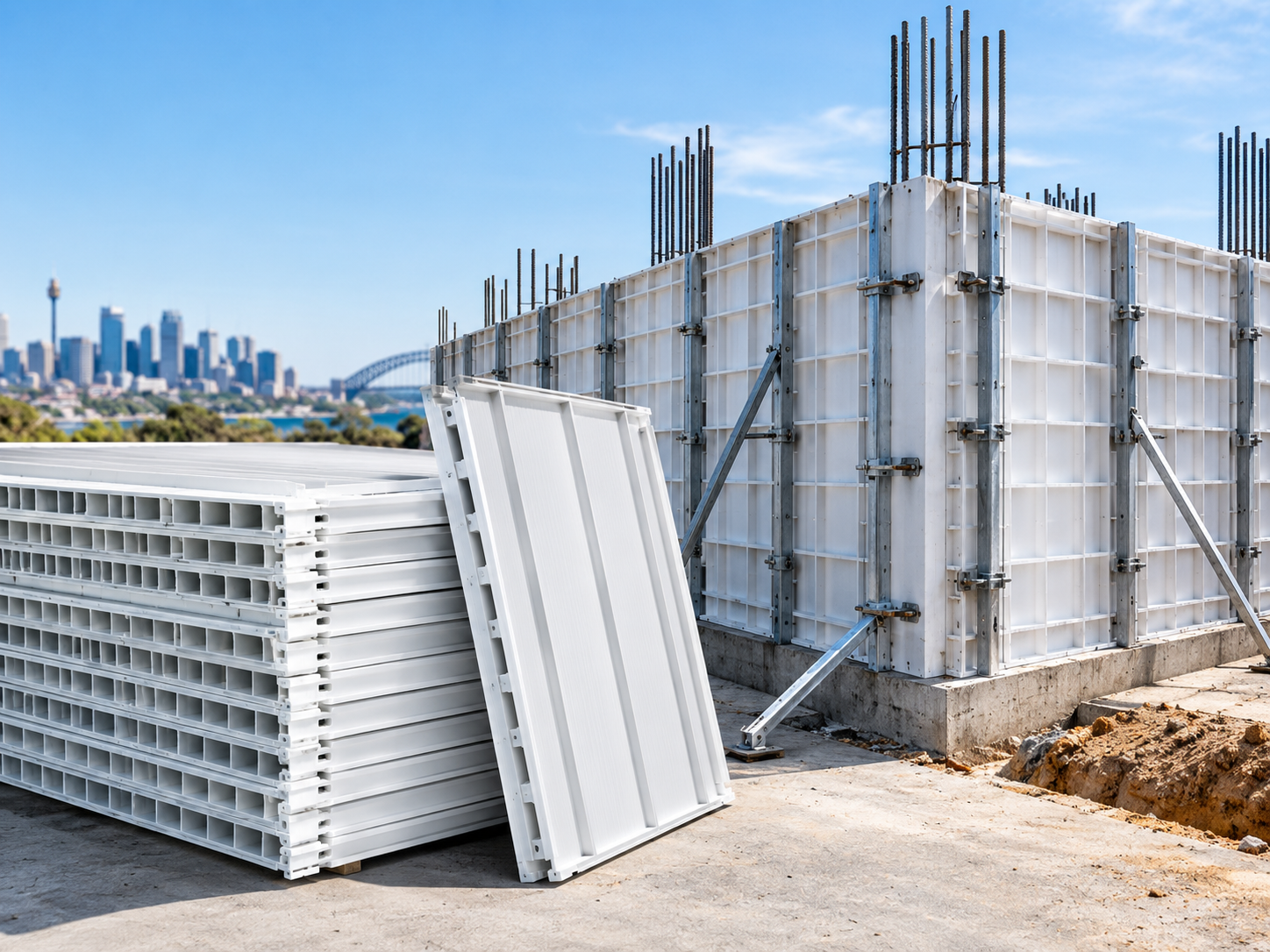
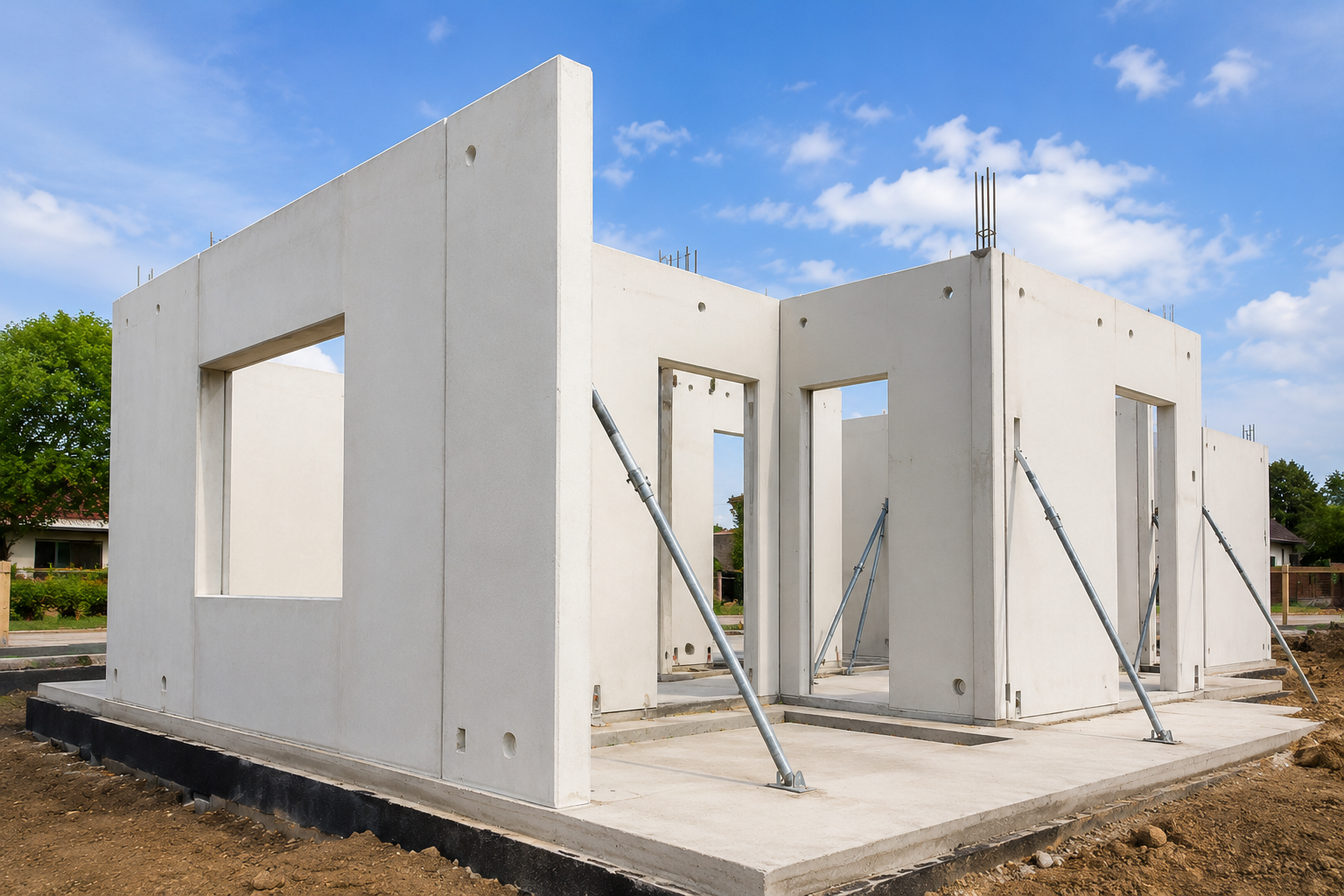
- Wall panel systems where applicable (e.g. Hebel AAC panels for boundary or party walls)
- Fire and acoustic-rated products for shared or party walls
- Lintels and structural steel where required
Most forgotten item: accessories for panel systems. It’s common for the main panel quantity to be priced and ordered while the adhesive, C-channel, top hats, brackets, control joints and sealants needed to actually install the system are missed or under-allowed — leaving installers on site without what they need to finish the job.
3. External Walls, Cladding and Weatherproofing
- Cladding or wall panel product
- Sarking and weather barriers
- Flashings and joint sealants
- Insulation (wall cavity)
- Fixings rated for the specific cladding system
- Control and expansion joint materials
Most forgotten item: fire-rated joint products where required by the wall system — easy to overlook if it’s not called out separately on the quote.
4. Roofing Materials
- Roofing sheets, tiles or membrane
- Roof battens and structural supports
- Insulation and sarking
- Guttering, downpipes and flashings
- Roof fixings rated for wind and site exposure category
Most forgotten item: confirming the site’s wind rating before finalising fixing specifications — a mismatch here is a compliance issue, not just a delay.
5. Windows, Doors and Openings
- Window and door units to the confirmed schedule
- Flashings and weatherproofing around openings
- Reveals, architraves and trims
- Hardware (locks, hinges, handles)
- Glazing specification (safety, acoustic or thermal rated where required)
Most forgotten item: reveals and trims — often priced separately from the window/door unit itself and missed in the initial materials order.
6. Flooring Materials
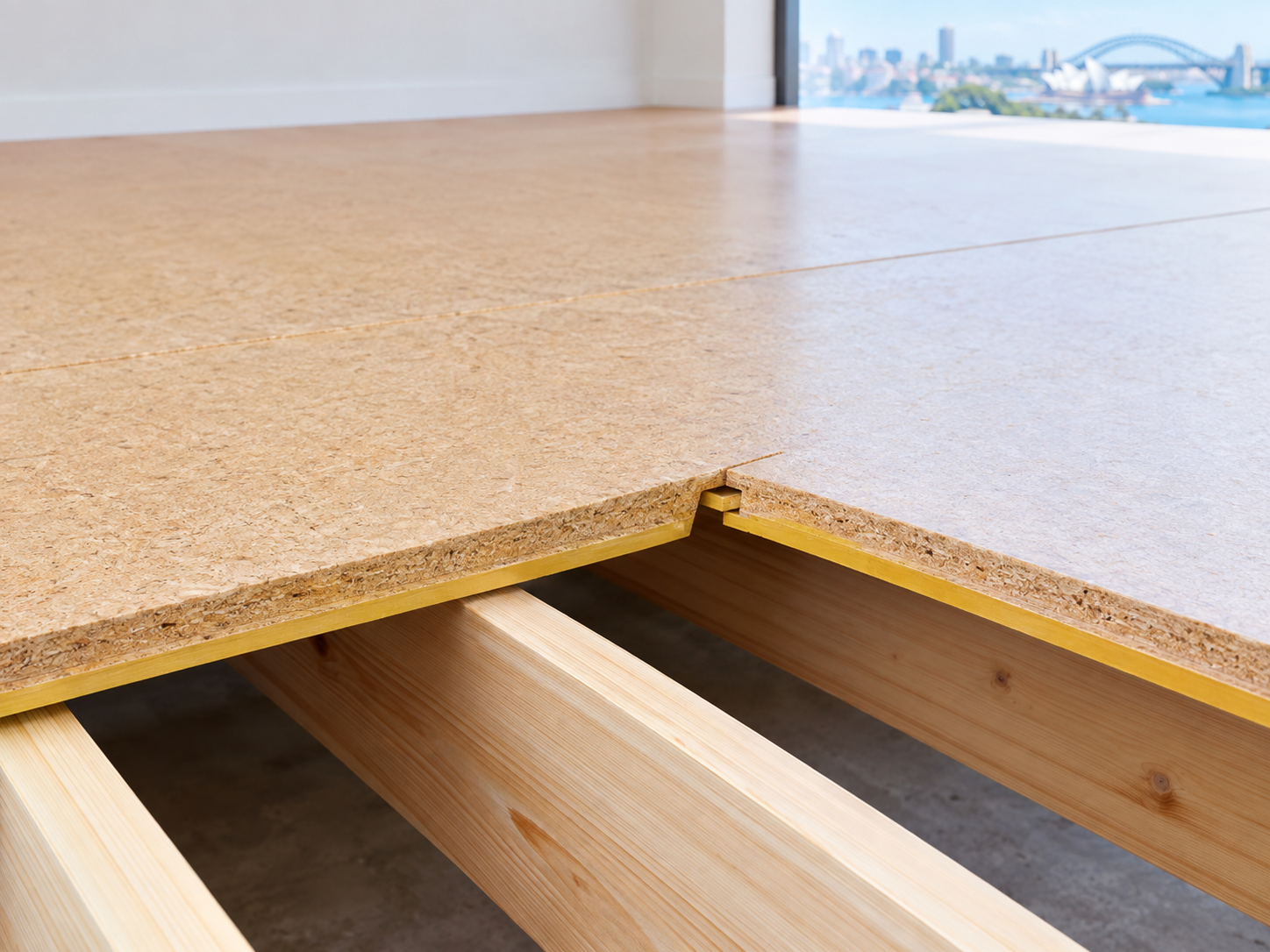
- Flooring product (timber, engineered timber, hybrid, laminate or vinyl)
- Underlay
- Trims and transition strips
- Adhesive or fixing method appropriate to the subfloor
- Moisture barrier where required (bathrooms, laundries, ground floor slabs)
Most forgotten item: subfloor condition assessment before ordering — the wrong flooring product for a damp-prone subfloor causes problems long after installation.
7. Internal Linings and Finishes
- Plasterboard and internal linings
- Cornices, skirting and internal trims
- Paint and finishing products
- Internal doors and hardware
- Tiling materials and adhesives (wet areas)
Most forgotten item: wet-area waterproofing membrane, quoted and installed separately from tiling — confirm it’s covered in someone’s scope, not assumed to be included.
Neither option is “better” — it depends on whether you already have trusted installers lined up, or whether you’d rather one supplier manage more of the process.
8. Fixtures, Fittings and Final-Stage Materials
- Kitchen and bathroom fixtures
- Plumbing and electrical fittings
- Final hardware (door furniture, cabinetry hardware)
- Skirting, architraves and final trims
- Sealants and touch-up materials for handover
Most forgotten item: handover-stage touch-up materials — small enough to seem irrelevant at quoting stage, frustrating to source last-minute when snagging items come up.
The Full Checklist at a Glance
Phase | Key Materials | #1 Forgotten Item |
Site & Foundation | Concrete, reinforcement, waterproofing | Confirming access before ordering |
Structural & Framing | Framing, wall panels, fixings | Panel system accessories |
External Walls & Cladding | Cladding, sarking, insulation | Fire-rated joint products |
Roofing | Sheeting, battens, guttering | Wind-rated fixings |
Windows & Doors | Units, flashings, hardware | Reveals and trims |
Flooring | Product, underlay, trims | Subfloor moisture assessment |
Internal Linings | Plasterboard, tiling, paint | Wet-area waterproofing |
Fixtures & Fittings | Final hardware, fittings | Handover touch-up materials |
Three Questions to Ask Before You Place Any Materials Order
- “Is this quote for the main product only, or does it include the accessories and fixings needed to install it?” This single question prevents more site delays than any other on this list.
- “What’s the actual lead time, not the best-case lead time?” Ask specifically what happens if the order needs to be expedited or adjusted later.
- “Who do I contact if something’s missing or wrong with the delivery?” If there’s no clear answer, that’s worth knowing before you order, not after.
Common Mistakes That Undo a Good Checklist
Even builders who plan carefully run into the same few traps:
- Quoting phases too far in advance, then having specs change before ordering — leading to re-quotes and delays
- Treating accessories as an afterthought rather than pricing them alongside the main material
- Assuming standard delivery access without confirming site conditions with the supplier
- Splitting orders across too many suppliers, making it harder to track what’s actually been confirmed versus assumed
Where Building Gear Fits In
Building Gear assists builders, contractors and developers across Sydney with the supply of building materials — including flooring and Hebel AAC wall panel systems — with supply-only or supply-and-install options depending on the project. We price main materials together with the accessories, fixings and delivery requirements needed to actually complete the job, and we ask about site access and specifications upfront rather than after the order’s been placed.
If you’re working through your own materials checklist for an upcoming Sydney project, send through your plans or requirements and we’ll assist with a detailed, accurate quote.
📧 sales@buildinggear.com.au 📞 0494 393 682 🌐 www.buildinggear.com.au
Frequently Asked Questions
What's the most commonly forgotten item on a building materials list?
Accessories and fixings tied to a main product — adhesive, brackets, joint materials, trims — are the items most often under-allowed, because they’re priced separately or assumed to be included.
When should I start ordering building materials?
Work through this checklist phase by phase rather than ordering everything upfront — pricing materials too early often means re-quoting once specifications are confirmed closer to that stage of the build.
How do I avoid delivery delays on a construction site?
Confirm site access (truck, Hiab, crane, forklift) and any upper-floor or restricted-access requirements with your supplier before the order is placed, not on delivery day.
Should I use one supplier for everything or split materials across several?
Fewer suppliers generally means less to track and fewer gaps between quotes — but the right approach depends on whether one supplier can genuinely cover everything your project needs.